

Health & Fitness Branding Shoots: Studio vs Gym Location
If you’re a personal trainer, gym owner, fitness coach, or health brand, you already know that fitness photography matters. The question is where to do it — and the answer isn’t as straightforward as people think. Studio or gym? Controlled or chaotic? Clean or gritty?
Both have genuine strengths. Both have genuine limitations. And the right choice depends almost entirely on what your brand is actually trying to say.
I’m Jonny, and at Swivel I’ve shot fitness professionals all over the UK — in pristine studios, sweaty boxing gyms, CrossFit boxes, yoga studios, and a few locations in between. Here’s my honest take.
What is Fitness Photography?
Fitness photography is commercial photography made specifically for health, sport, and wellness brands. That covers personal trainers, nutritionists, gym owners, fitness app companies, supplement brands, activewear labels — basically anyone whose business exists in the health and fitness space.
Good fitness photography does two things simultaneously: it looks great, and it communicates something real about who you are and what you stand for. The best fitness photos aren’t just technically impressive — they’re specific. They feel like you, not like a stock library.
Where you shoot plays a huge part in whether that specificity comes through.
The Studio Shoot Experience
Advantages of studio fitness photography
Studios give you control — and in photography, control is enormously valuable. You control the light, which means you get consistent, repeatable results. You control the background, which means the focus stays exactly where you want it. You’re not competing with a badly-positioned piece of equipment, a distracting logo on someone else’s kit, or a fluorescent tube flickering in the background.
For fitness photography that’s product-focused — activewear, equipment, supplements — studios are often the obvious choice. Same for headshots, profile shots, and anything where the emphasis is on the person rather than the environment.
Studios are also more relaxed for subjects who aren’t used to being in front of a camera. There’s no audience. Nobody’s mid-set in the background wondering why there’s a photographer. You can take your time, try things, mess up, try again. That unhurried energy tends to produce better results.
Equipment and setup considerations
A well-equipped studio will have professional lighting rigs, adjustable backdrops, and the kind of space that lets a photographer properly direct a shot. This is worth paying attention to when booking — not all studios are equal. Ask what’s included, what the dimensions are, and whether they have the specific backdrops or props you need before you commit.
Recommendations for studio fitness shoots
Come with a clear brief. Studios are at their best when you know what you want. Mood board, brand colours, the kind of energy you’re going for — bring it all. If you’re working with a photographer who does their job properly (more on that later), they’ll have asked you for all of this in advance anyway.
The Gym Location Shoot Experience
Why shooting on location works for fitness photography
There’s something a studio genuinely can’t replicate: the texture of a real environment. The chalk-dusted barbell. The worn leather of a boxing bag. The early-morning light coming through the windows of a proper gym that’s been there for twenty years. A studio can gesture at these things; an actual gym is them.
For fitness photographers, location shoots are often where the most compelling images come from — precisely because you’re working with real context rather than creating a facsimile of it. When your audience looks at a gym shoot and recognises the environment, it creates an instant, instinctive connection. That’s the brand doing its job.
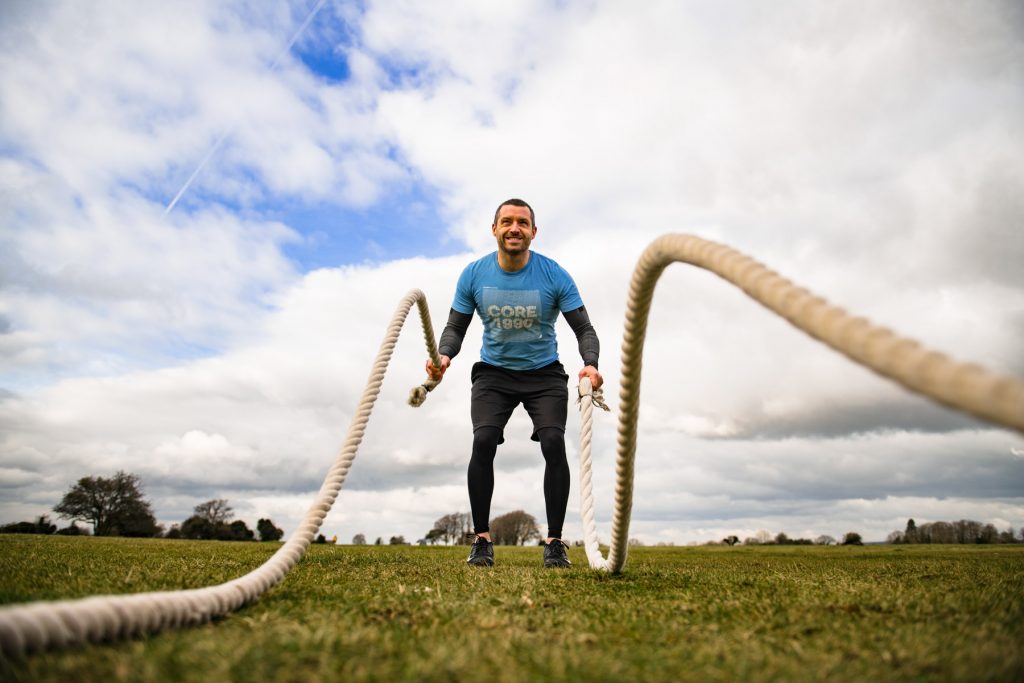
Action shots particularly benefit from real locations. The energy of someone actually training — the focus, the effort, the momentary grimace at the top of a heavy lift — is much easier to capture authentically when the environment supports it.
Capturing authenticity in action
This is the thing about fitness photography in a gym: you’re not directing a performance, you’re documenting (and shaping) something that’s actually happening. The best shots often come when the subject forgets the camera exists entirely and just… trains. Your photographer’s job is to be ready when those moments happen — and to create the conditions where they’re likely to.
Choosing the right gym for your shoot
This matters more than people realise. The gym needs to fit your brand. A raw, industrial powerlifting gym is perfect for some fitness photographers’ work and completely wrong for others. A boutique pilates studio might be exactly right for one client and irrelevant for another. Think about whether the gym’s aesthetic, equipment, and vibe aligns with the clients you’re trying to attract. If there’s a mismatch, it’ll show in the photos.
Also practical stuff: check whether the gym will let you shoot there, whether it’ll be open or closed during your shoot, what the lighting situation is, and whether there’s flexibility on timing.
Comparing Aesthetics: Studio vs Gym
Lighting differences
Studio lighting and natural gym lighting produce very different results — and both can be excellent, in different ways. Studio lighting is precise and controllable; you can sculpt it to flatter the subject and match the brand’s visual identity exactly. Gym lighting tends to be more unpredictable, but when it’s good — particularly natural light from high windows, or the warm ambient glow of a well-designed boutique gym — it adds a quality that studio lighting rarely replicates.
A skilled fitness photographer works with whatever light they’ve got. But it’s worth being aware of what each environment tends to produce before you commit.
Backdrops and visual appeal
Studios: clean, focused, brand-consistent. Everything in frame is there because you put it there.
Gyms: textured, contextual, alive. Everything in frame is there because it belongs there.
Neither is objectively better. They’re just different visual languages. The question is which one tells your brand’s story more accurately.
Subject focus: athlete vs environment
Studio fitness photography tends to foreground the person. The environment recedes; it’s there to support rather than contribute. Gym photography does the opposite — the environment is part of the story, and the relationship between the athlete and their space is often the point.
Cost Considerations
Budgeting for studio shoots
Studio hire costs vary widely, from a few hundred pounds for a basic half-day to considerably more for premium spaces with full equipment. Add in the photographer’s time and post-production, and you’re looking at a real investment. It’s worth it for the right project. Just don’t budget for the shoot itself and forget about everything else involved in getting it done properly. See Swivel’s pricing here.
Gym shoot expenses
Gym shoots can be cheaper on the location side, some gyms will let you shoot for free or a modest fee, particularly if you have a relationship with them. But travel, access arrangements, and the unpredictability of real environments can eat into that saving. Factor it all in before assuming a location shoot is the more affordable option.
Preparing for Your Fitness Photoshoot
Pre-shoot checklist
Good fitness photography starts well before you turn up with a camera. Sort out: location confirmed and accessible, wardrobe planned and pressed, brief agreed with your photographer, timeline set, and any props or equipment you want featured are clean and on-site. If you’re working with models or other subjects, confirm everything with them the day before.
Working with the right photographer
This one’s obvious but worth saying: work with someone who actually shoots fitness. Fitness photography has specific technical demands — capturing movement cleanly, working in challenging light, making real effort look powerful rather than just exhausting. Check portfolios. Look for photographers whose fitness work looks like what you want, not just photographers who list fitness as one of fifteen things they’ll turn their hand to.
Styling and Wardrobe
For studio shoots
Studios amplify wardrobe choices, so it pays to be intentional. Colours that complement your brand palette, fits that photograph well, fabrics that don’t crease badly under lights. Avoid logos of other brands unless you have a reason to feature them. Layers can add visual interest but check they work practically with the movements involved.
For gym shoots
Functional activewear that represents your brand well. Gym shoots live or die on movement, so whatever you wear needs to move with you. Performance fabrics are a good call — they look better on camera during exertion than cotton, which bags and clings in unflattering ways. And a word to the wise: bring options. The shot you planned might not be the shot you get, and having a wardrobe change available keeps things flexible.
Post-Shoot Editing
Editing approaches for studio vs gym
Studio fitness photography tends to suit a cleaner edit — precise colour correction, controlled retouching, a polished finish that matches the controlled environment it came from. Gym photography often benefits from a slightly more natural treatment that preserves the grit and energy of the setting rather than editing it out.
Neither is a rule, just a tendency. The edit should always serve the image and the brand, not a preset template.
The role of digital enhancement
Editing is part of the process, not a fix for problems that should have been solved on set. The best fitness photographers get it right in camera and then enhance rather than rescue. Good post-production can lift a great image to something exceptional. It can’t turn a mediocre one into something worth using.
Tips for Choosing the Right Location
Ask yourself what your brand is actually about. If it’s about precision, clean lines, and performance aesthetics — lean studio. If it’s about community, graft, real-world training, and doing the work — lean location. If it’s somewhere in between, consider a hybrid approach: a location shoot for action and context, with studio headshots or product shots to round out the library.
Also think about your audience. Where do they train? What does their fitness world look like? The more your imagery reflects their reality, the more likely it is to stop them mid-scroll.
Conclusion: Making the Right Choice
Studio and gym fitness photography aren’t rivals — they’re different tools for different jobs. The best fitness brands usually end up using both at various points, because different content needs different environments.
What matters is that you’re making a deliberate choice rather than a default one. Think about your brand, your audience, your content needs, and your budget. Brief your photographer properly. And don’t settle for imagery that looks like it could belong to anyone — because in fitness, where the market is noisy and the visual competition is fierce, generic is the enemy of growth.
FAQ
What is fitness photography?
Fitness photography is commercial photography created for health, wellness, and sport brands. It includes everything from personal trainer headshots and gym action shots to activewear product photography and brand lifestyle content.
What’s the difference between studio and gym location shoots?
Studios offer full control over light and environment, producing clean, consistent images ideal for brand-focused and product shoots. Gyms provide authentic, contextual settings that capture real energy and movement — particularly effective for action-led content.
How can fitness photography improve a brand’s image?
Quality fitness photography signals professionalism, builds trust, and — most importantly — makes your brand feel specific and real. Generic imagery blends in. Good fitness photography makes your brand recognisable and memorable.
How much does fitness photography cost?
It depends on the photographer, location, length of shoot, and what’s included in terms of editing and image delivery. See Swivel’s pricing for a straightforward overview.
What should I wear for a fitness photoshoot?
Clothes that are on-brand, fit well, and move with you. Avoid anything with prominent competing logos. For studio shoots, think a bit more polished; for gym shoots, prioritise performance and practicality.
How important is editing in fitness photography?
Extremely — but it should enhance rather than fix. The goal is images that look like a better version of reality, not images that look processed or artificial. The edit should match the brand and the environment.
Should I shoot in a studio or a gym?
There’s no universal answer. Consider what your brand stands for, what kind of content you need, and who your audience is. If you’re unsure, a good fitness photographer will help you work it out in the briefing process.

Can Swivel help with fitness photography?
Yes. Get in touch to talk about what you need.
Jonny Barratt is a commercial photographer based in Gloucestershire, working with health, fitness, and wellness brands across the UK. Say hello.