

How to Refresh Outdated Brand Photography Without Full Reshoots
Here’s a situation a lot of businesses find themselves in. You had a branding photography shoot a couple of years ago. The photos were great at the time, maybe even brilliant. But now they feel a bit… stale. The haircut’s slightly different. The product range has moved on. The overall vibe doesn’t quite match where the business has got to.
The knee-jerk response is to book a full reshoot. And sometimes that’s the right call. But not always. Before you go scheduling something from scratch, it’s worth understanding what you actually have, what can be salvaged or repurposed, and where a targeted refresh might do the job far more efficiently than starting over.
This is a practical guide to doing exactly that.
What is Branding Photography?
Branding photography is the full body of visual content that represents your business: portraits, product shots, lifestyle images, behind-the-scenes moments, team photography, environmental shots of your workspace. Everything that, collectively, tells someone who you are before they’ve read a single word.
Good branding photography is consistent, purposeful, and specific to you. It’s not a generic headshot against a white wall. It’s a visual identity. And like any identity, it needs to evolve as the business does — which is exactly why this question comes up so often.
How to Tell Your Branding Photography Needs a Refresh
The signs are usually pretty obvious once you know what to look for.
Your images no longer reflect the business you actually run. The service offering has changed, the team has changed, or the physical environment has changed — and your photography still shows the old version. That’s a disconnect your audience will feel even if they can’t articulate why.
Your visual style feels dated. Photography trends move fast, and what looked current in 2020 can feel noticeably tired now. Overly staged shots, heavy-handed editing, forced laughter at laptops — if your imagery has any of that energy, it’s working against you.
Your images aren’t performing. Low engagement on social, poor time-on-page for content-heavy pages, feedback from clients that they couldn’t get a feel for the business before getting in touch — these are all symptoms worth paying attention to.
Your brand has evolved but your photography hasn’t. A rebrand, a new audience, a change in direction or positioning — any of these can create a gap between who you are now and what your current imagery communicates.
Start With a Photo Audit
Before doing anything else, go through what you actually have. Not a quick scroll, a proper audit. List every image you’re using across your website, social platforms, marketing materials, and email signatures. For each one, ask three questions: does it still represent the brand accurately? Is the quality good enough? Does it connect emotionally with the audience you’re trying to reach?
Be honest. Some images will be obvious keepers — strong, timeless, still on-brand. Some will be obvious cuts. The interesting ones are in the middle: images that have something good about them but aren’t quite working as-is, which is where the refresh work begins.
What to keep and what to replace
Keep images that accurately represent your brand, have strong technical quality, and feel specific rather than generic. Replace anything that’s visually dated, no longer reflects your current offering, or simply isn’t doing the job it’s supposed to do. The goal isn’t to hold onto everything you’ve got — it’s to build a lean, strong visual library that actually works for you.
Enhancing Existing Images With Editing
A surprising amount of life can be added to existing branding photography with thoughtful post-production, and this is often the most cost-effective place to start.
Basic editing techniques
Colour correction can bring a more consistent palette across an uneven set of images shot in different conditions. Cropping can reframe a composition that isn’t quite working, removing distracting elements and improving focus on the subject. Adjusting brightness and contrast can breathe new life into images that feel flat or muddy.
These are entry-level changes and, done well, they can make a noticeably dated image feel considerably fresher.
More advanced editing approaches
Retouching can address specific issues like skin tone inconsistencies or distracting backgrounds. Compositing can combine elements from different shots to create something that didn’t quite exist in any single frame. Background replacement can give you clean, consistent imagery from location shots that had messy or irrelevant surroundings.
The caveat: editing can improve a good image, but it can’t save a fundamentally poor one. Know the difference before investing editing time in something that really just needs to be reshot.
Repurposing What You Already Have
Existing branding photography can often do more work than it’s currently doing, simply by being used differently.
Reframing images for new campaigns
An image shot for one purpose can frequently serve another with minimal adjustment. A portrait used on your About page might work just as well in a social media campaign. A product lifestyle shot from a previous season might slot perfectly into new content with updated copy around it. Think about your existing images as a flexible asset rather than a fixed set of specific uses.
Creative ways to reuse existing photography
Collages and multi-image layouts can give older content a fresh context. Sequential storytelling across social posts can make a set of existing images feel purposeful and new. Revisiting archival shots with the eye of someone who wasn’t involved in the original shoot often reveals images that got overlooked the first time around, ones that are actually very strong.
Updating Your Visual Style Without a Full Reshoot
Sometimes what feels like a photography problem is actually a presentation problem. The images themselves are fine — it’s the way they’re being used that’s making things feel stale.
Develop clearer visual guidelines
If your branding photography feels inconsistent, it’s worth stepping back and defining what consistent should look like. What colours appear across your imagery? What mood? What subjects? What is always excluded? A clear visual brief, applied retrospectively to your existing library and prospectively to any new content, can create cohesion from a set of images that previously felt scattered.
Refresh your colour approach
Colour treatment is one of the most powerful tools for making a set of images feel unified. Applying a consistent colour grade across your existing photography, even a subtle one, can make disparate shots feel like they belong to the same visual world. It’s a relatively small intervention that can have a significant impact on how professional and intentional the overall brand presentation feels.
Incorporate current trends thoughtfully
Authenticity, specificity, and naturalism are where branding photography is right now. Audiences are more attuned than ever to imagery that feels staged or artificial, and they disengage from it fast. If your existing images have that overly polished, stock-photo quality, that’s worth addressing in how you present them, and in how you brief any future shoots.
Leveraging User-Generated Content
If your customers are creating content featuring your brand, pay attention to it. User-generated content is gold not because it’s free but because it’s trusted. Audiences engage with it differently to brand-produced imagery, because it’s obviously real.
Actively encouraging customers to share photography of your products or services, and building campaigns that make it easy and appealing to do so, gives you a stream of authentic visual content that complements your professional branding photography. Curate it carefully — not everything will be on-brand — but what is can be genuinely valuable.
When a Targeted Reshoot Is the Right Call
All of the above is genuinely useful but it’s also honest to say: sometimes you just need to get back in front of a camera. If your photography library is fundamentally out of date, if the business has changed substantially, or if the quality of the existing images simply isn’t good enough to do what you need them to do, no amount of editing or repurposing is going to bridge that gap.
The good news is that a targeted reshoot, focused specifically on the gaps in your current library, is almost always more efficient than starting completely from scratch. Rather than trying to create everything at once, identify the three or four types of content you’re most obviously missing, and shoot those specifically. Build from there.
At Swivel, this is exactly the kind of conversation I have with new clients. Before anything else, we look at what they’ve already got. See pricing here, or get in touch to talk about what a refresh might look like for your brand specifically.
FAQ
What is branding photography?
Branding photography is the full body of visual content that represents your business. It includes portraits, product shots, lifestyle images, team photography, and environmental content — everything that collectively communicates who you are and what you do.
Why does professional branding photography matter?
Because first impressions are almost always visual. Good branding photography signals professionalism, builds trust, and creates the kind of emotional connection with an audience that generic or poor-quality imagery simply can’t. It also directly improves marketing performance across every channel it’s used on.
How do I know if my branding photography is outdated?
The key signals are: images that no longer accurately represent your business or team, a visual style that feels dated relative to current trends, poor engagement with content featuring those images, and a gap between how the brand presents visually and where it’s actually positioned.
What is a photo audit?
A photo audit is a systematic review of every image you’re currently using across all platforms and materials. The goal is to assess each image for relevance, quality, and emotional impact, and to identify what’s worth keeping, what needs to be edited or repurposed, and what needs to be replaced.
What basic editing techniques can refresh existing images?
Colour correction, brightness and contrast adjustment, and cropping are the most useful starting points. Applied consistently across a set of images, these can bring significant coherence and freshness to photography that feels slightly tired.
How can I reuse older images in new campaigns?
By changing the context they appear in rather than the images themselves. New copy, new placement, new layout, or combining images into collages and sequential content can all give existing branding photography a fresh purpose.
What should I think about when developing a new visual identity?
Start with what makes your brand genuinely distinct, then build guidelines around colour, subject matter, composition style, and mood that reflect those qualities. Consistency is the goal — not sameness, but a coherent visual language that’s recognisable as yours across every touchpoint.
What is user-generated content and why does it matter for branding?
User-generated content is photography and other content created by your customers rather than your brand. It matters because audiences trust it. Curated carefully and used alongside professional branding photography, it adds authenticity and community to your visual presence in a way that polished brand imagery alone can’t quite replicate.


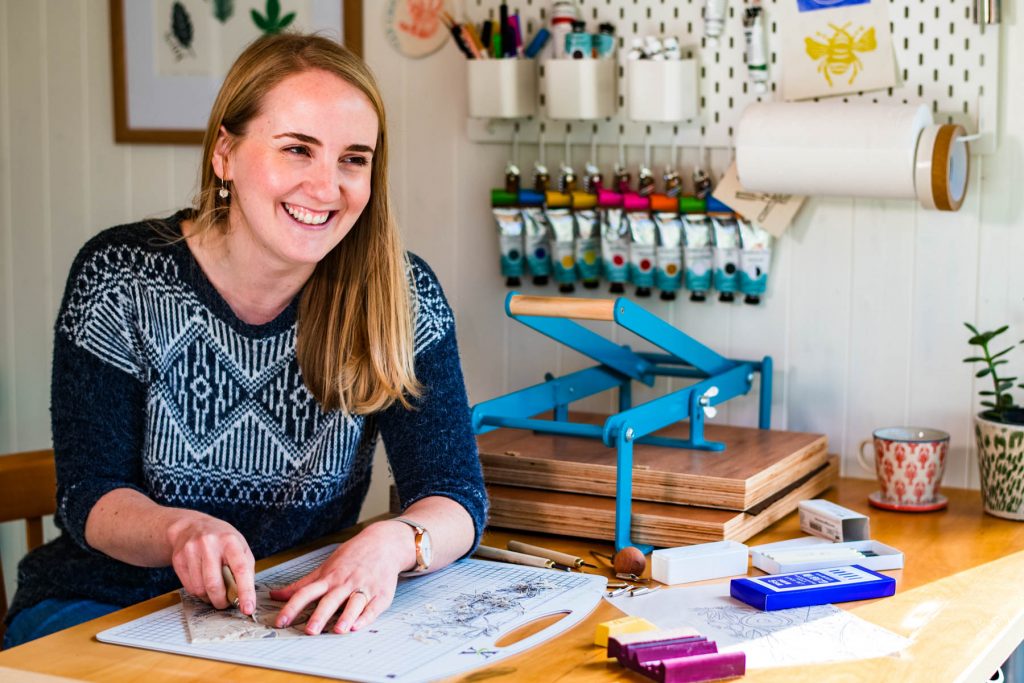

Jonny Barratt is a commercial photographer based in Gloucestershire, working with independent businesses and brands across the UK. If your branding photography needs a rethink, let’s talk.